Tropicfeel Lift Rollerbag Review
The Tropicfeel Lift 40L Rollerbag looks sleek and versatile, but its wobbly handle, cramped layout, and clunky expansion hold back its more redeeming features.
Our Verdict
Save time. Get access to brief summaries of our reviews so you can browse and make decisions more efficiently.
Pros
- Durable recycled polyester exterior with quality YKK zippers and Duraflex hardware
- Quick and easy magnetic strap system for switching to backpack mode
- The modular system offers theoretical flexibility with optional accessories
Cons
- The telescoping handle is extremely wobbly and feels cheap
- Poor space efficiency, with compartments and pockets that feel cramped
- Finicky expansion system, and it relies on purchasable add-ons to reach the marketed capacity
Technical Details
-
Capacity
40l
Expands up to 52 liters | Added accessories and attached bag increases capacity up to 82 liters
-
Weight (lb)
6.39 lb (2.9 kg)
-
Dimensions
21.7 in x 14.2 in x 8.66 in (55.1 x 36.1 x 22 cm)
-
Notable Materials
Recycled Polyester, Polyester, YKK Zippers, Rubber, Duraflex Hardware
-
Manufacturing Country
Vietnam
-
Warranty Information
Full Review
At first glance, Tropicfeel’s Lift 40L Rollerbag looks like a travel multitool for people who want to do it all—roll it, carry it, wear it as a backpack, and still look good walking through the airport. It’s marketed as a modular system that expands from 40 to 70 liters, fits neatly into your travel setup with optional accessories, and packs like a dream. On paper, it’s the kind of bag we love to test: sleek, versatile, and ambitious. But as we’ve learned through testing, “ambitious” can translate to “overly complicated”.
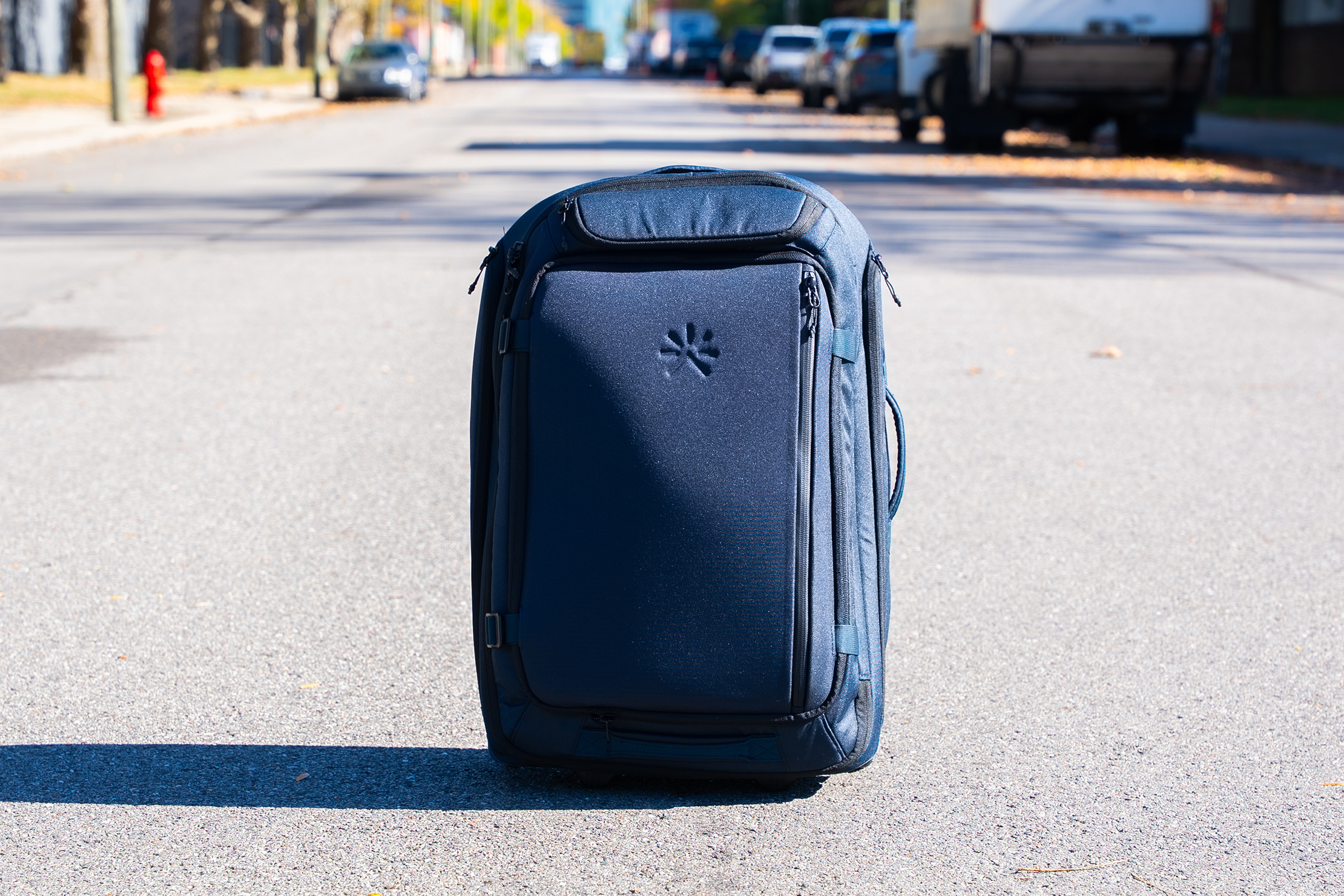
After two weeks of real-world use, we were impressed by a few clever details, like the magnetic backpack straps and the quality hardware. However, we’re mainly frustrated by the bag’s fussy organization, limited comfort, and confusing design choices. The result is a piece of luggage that sounds incredible in theory but struggles to deliver a smooth travel experience in practice.
External Components
Let’s start with the outside. The bag’s shell is made of recycled polyester, which feels fairly durable, though not premium. The finish is smooth and slightly structured, which gives it a modern travel aesthetic. Tropicfeel equipped it with YKK zippers and Duraflex hardware—two features that usually inspire confidence. And while the zippers perform well, the way they’re stitched into the bag makes them snag around tight corners. It’s not a zipper issue—it’s a construction issue. Whenever we tried to open the main compartment or expansion area, the zippers hesitated or caught, making us less confident about quickly accessing the bag in transit.

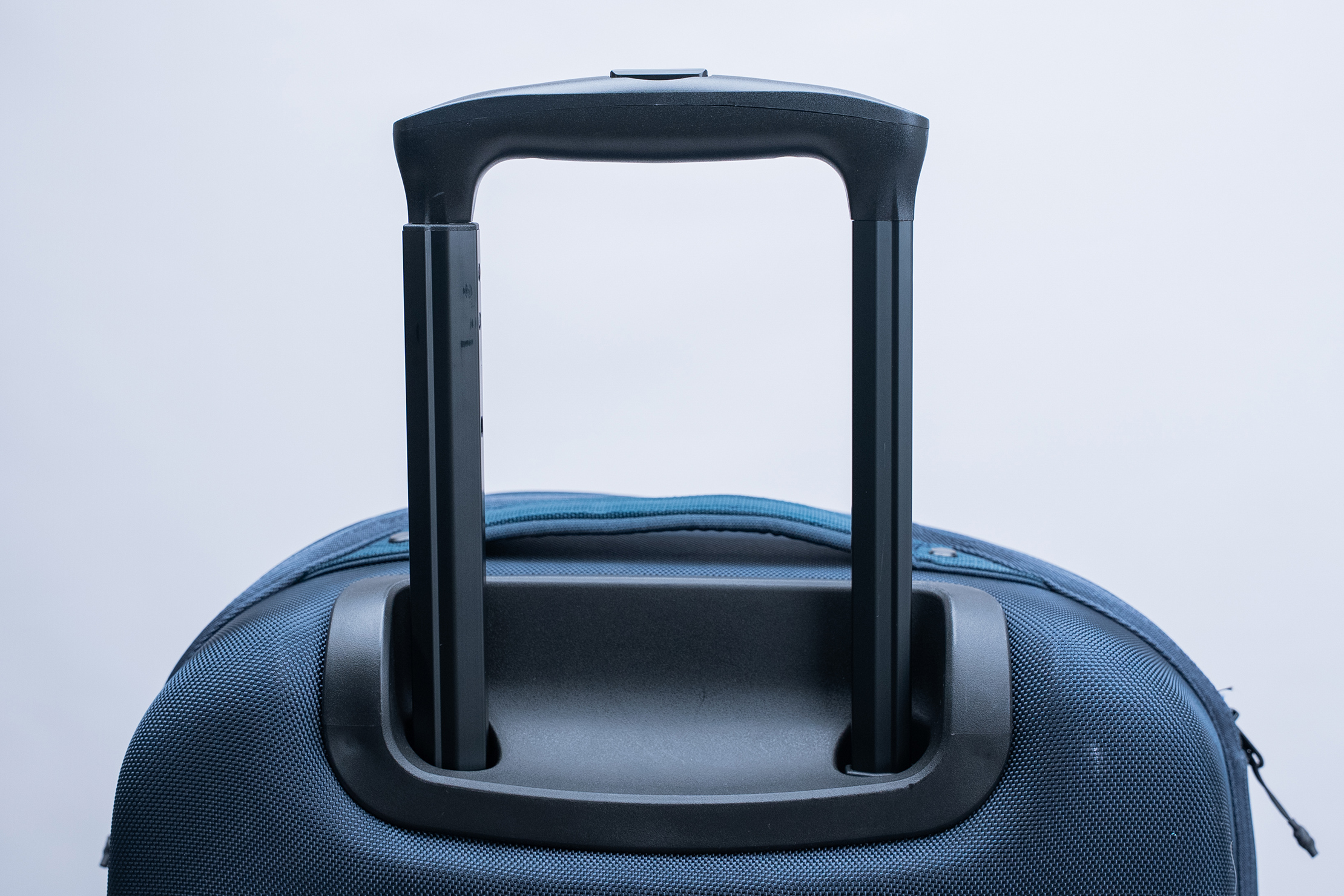
The wheels are 8 millimeters in size, rubberized, and they roll … fine. They’re not buttery-smooth like what you’d find on higher-end luggage, and they feel slightly loose on uneven floors. The real problem, though, comes from the telescoping handle. It’s wobbly—like incredibly wobbly. We usually find Tropifeel’s gear solidly built, but the amount of play in this handle’s construction challenges that assumption. There’s only one height adjustment, and the whole handle rattles when you move the bag. The button that releases it feels plasticky and imprecise, which doesn’t inspire confidence when pulling it through a busy airport.
On the bright side, there are three carry handles: one on top, one on the side, and one on the opposite end. None are heavily padded, but the thick material wrapping them provides a slightly cushioned feel. They get the job done for short lifts into a trunk or overhead bin, but they’re uncomfortable for long hauls. There are also small bumpers on the bottom to help the bag stay upright. After minimal use, though, both the bumpers and the wheels showed visible scratches—nothing catastrophic, but it didn’t look as new as we’d expect after just a couple of weeks.
Fit Notes
When it comes to rolling performance, this luggage falls squarely in the “good enough” category. On smooth airport floors, it glides without much fuss. But things get shaky once you hit textured concrete, cobblestone streets, or anything remotely uneven. The handle flexes noticeably with every bump; because it’s so loose, you feel every vibration through your arm. It’s not unusable—it just feels cheap for a bag that costs nearly $400.
We also found the single handle height limiting. If you’re shorter or taller than average, you’ll likely end up hunching over or pulling it at an awkward angle. The weight distribution doesn’t help, either. The packed bag tends to wobble or drift slightly off to the side. Between the narrow wheelbase and the flexible handle, it lacks that planted, stable feeling we expect from quality luggage.
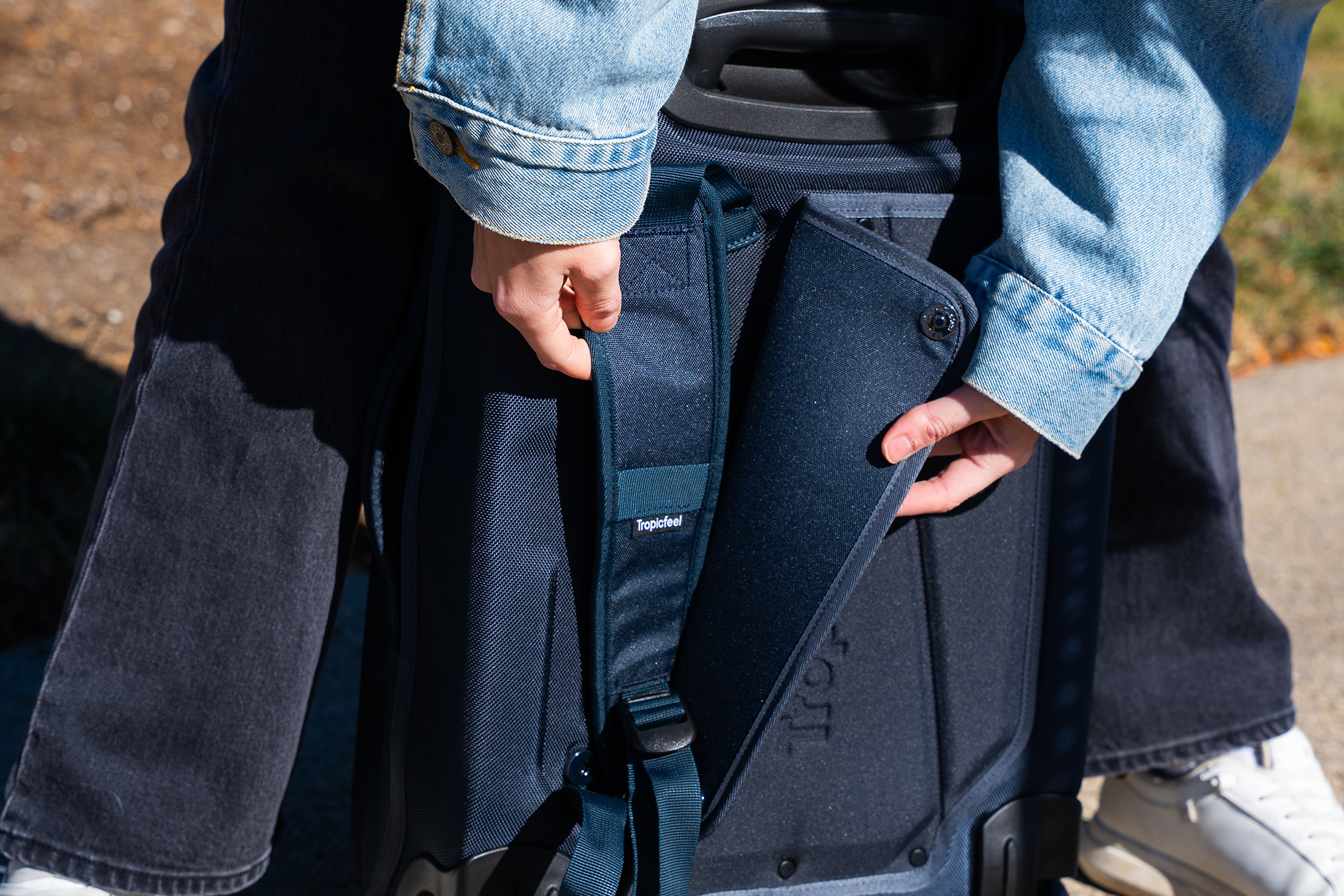
When you switch to backpack mode, things improve slightly—at least in terms of convenience. The harness system hides behind a zippered flap on the back panel and secures magnetically, so it’s super easy to deploy. Just unbuckle two clips, pull out the straps, and you’re ready to go. The design reminds us of the Peak Design Travel Backpack 45L, but this one is magnetized, and that wasn’t.
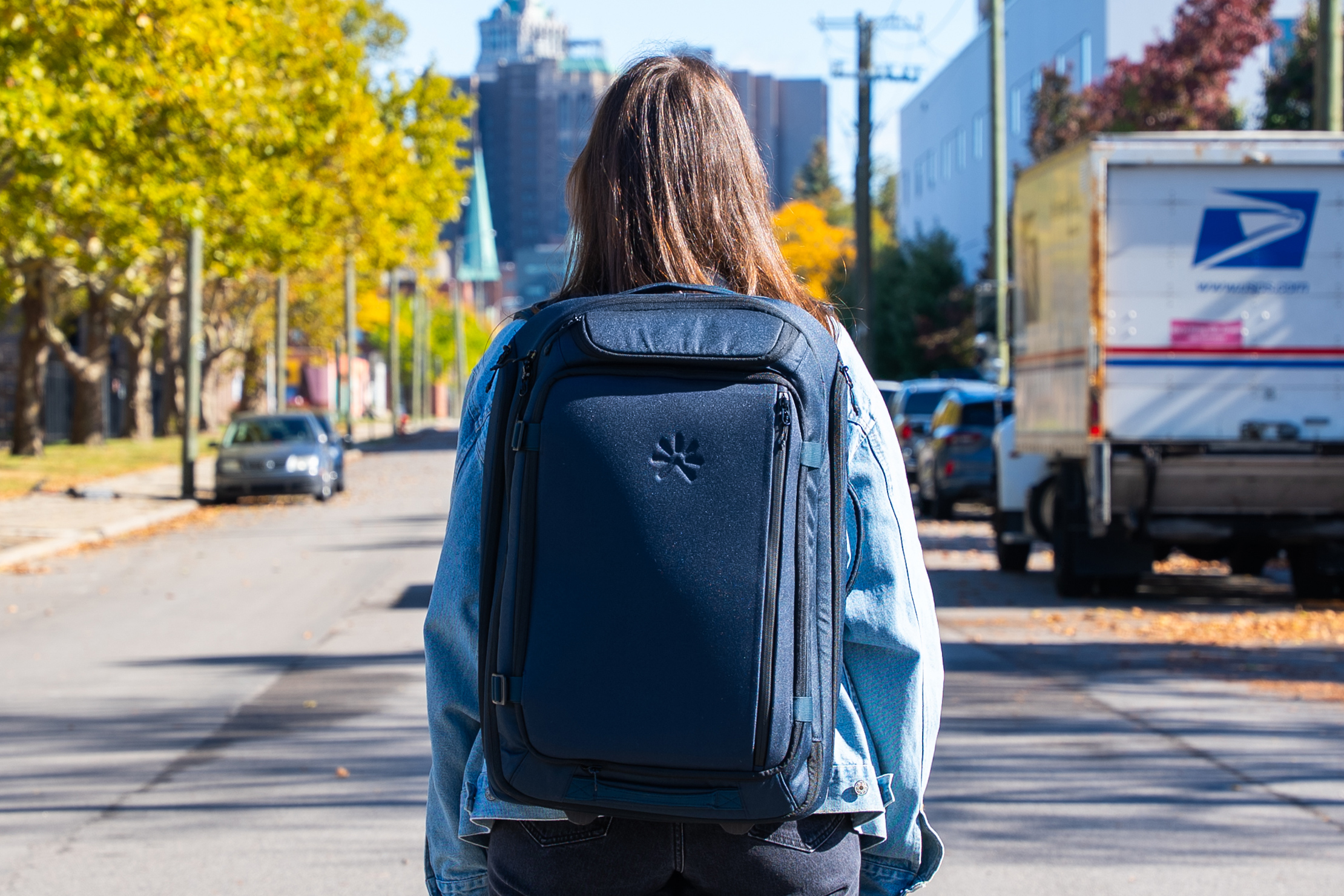
It’s a much easier way to use straps on convertible luggage than unhooking straps and attaching them manually. Unfortunately, “easy” doesn’t equal “comfortable.” The shoulder straps have almost no padding, and the back panel, while slightly cushioned, still feels stiff and flat. Carrying it this way is fine for short stretches up stairs or over cobblestones, but not something we’d want to do for more than a few minutes.
Inside The Carry On Luggage
Open the clamshell, and the layout looks straightforward at first: one large main compartment and a zippered divider on the opposite side. But once you start packing, the design quirks show up.
Let’s start with the expansion feature. The company claims the bag expands from 40 to 70 liters, but that number is misleading. Without add-on accessories (sold separately or bundled), it really expands from about 40 to 52 liters. The “70 liters” figure includes their Nest backpack, which doesn’t actually expand the suitcase—it just adds another bag. Once we unzipped the expansion section, we got closer to an additional 12 liters, which is decent, but the process is annoying. You have to loosen a set of straps first, unzip around the entire front panel, and then retighten everything once it’s expanded. Dealing with zippers and straps for expansion feels redundant and quite finicky when using this on a trip.
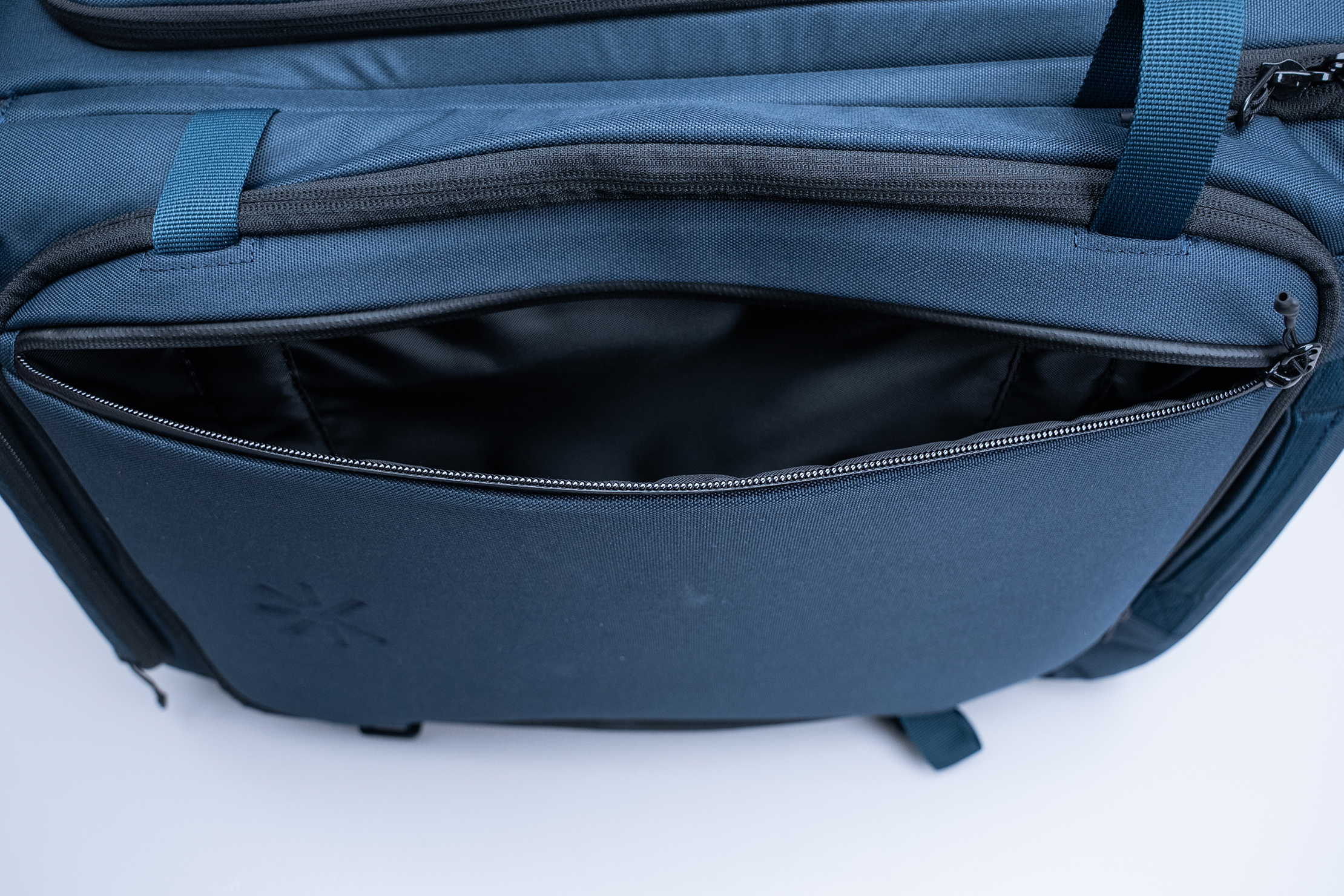
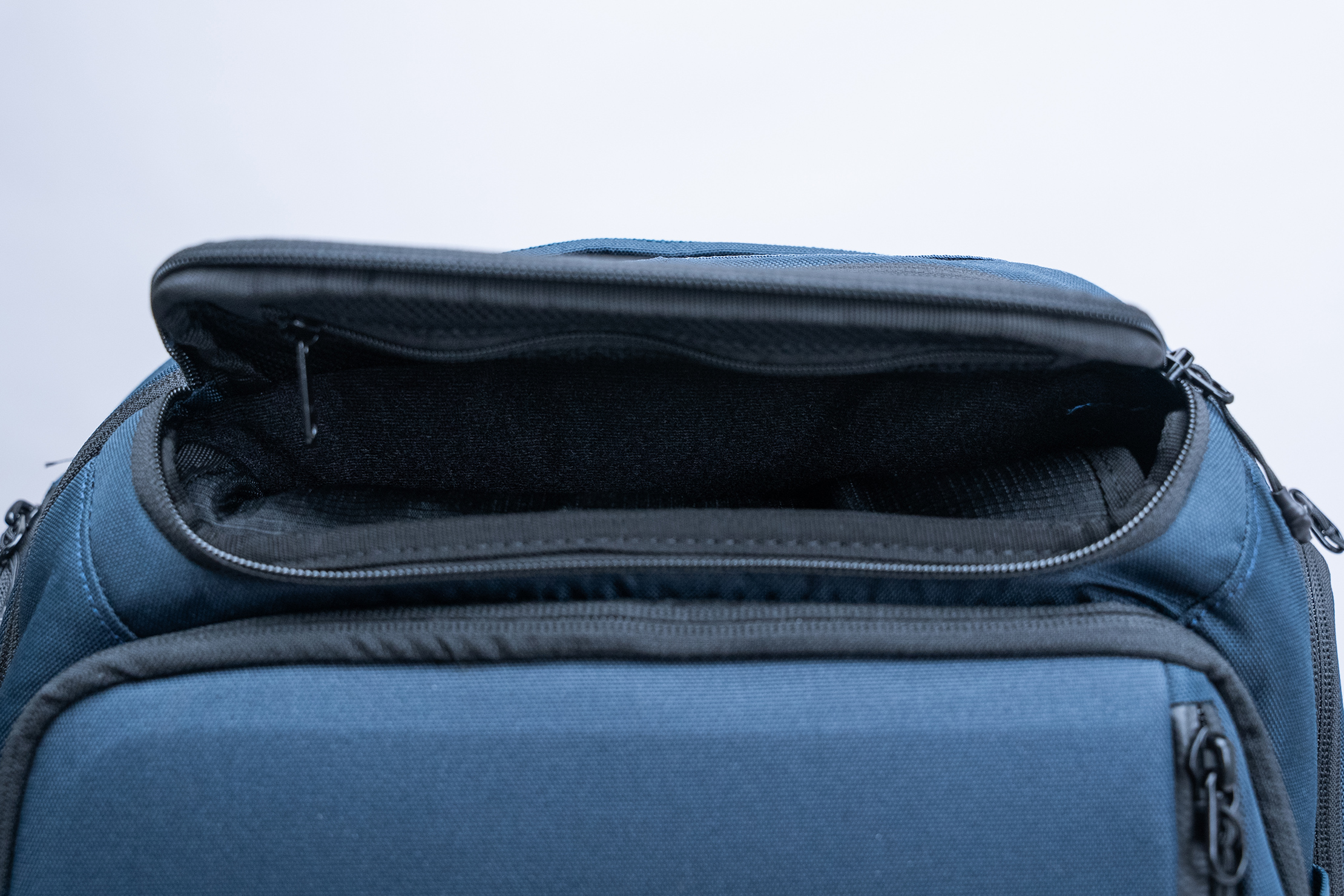
The laptop compartment sits on the front—adjacent to the expansion area, no less—and fits up to a 16-inch laptop, though the fit is tight. The zippers scrape against the device as it goes in and out, and the padding feels minimal. It’s fine for carry-on travel, but not something we’d trust in a checked situation. The same goes for the quick-access top pocket, which has a soft, felt-lined zipped area that’s great for sunglasses or headphones but gets tight once the bag is fully packed. The entire pocket can also swallow an entire pouch, with the obvious caveat that it robs space from elsewhere (the main compartment).
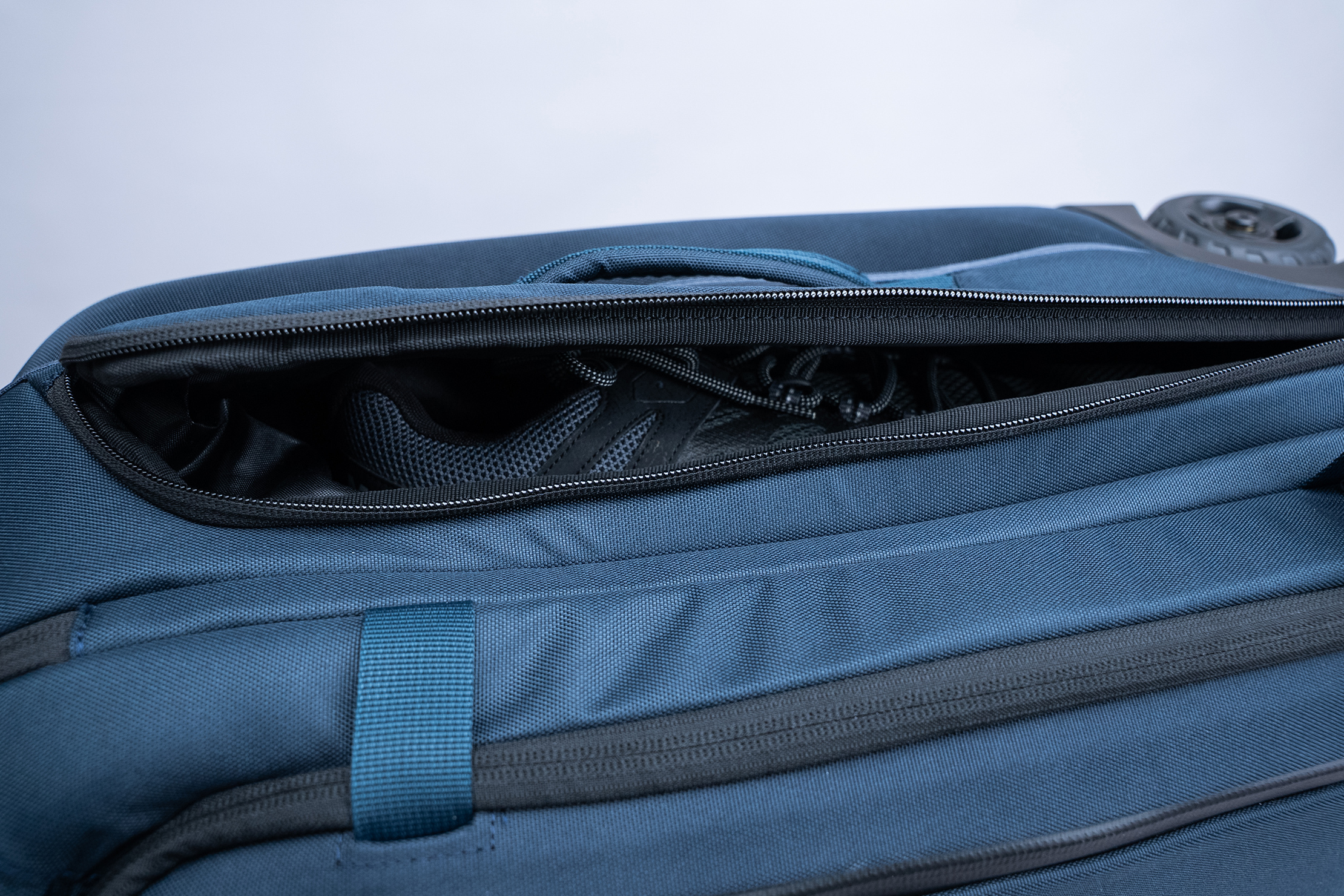
There are also two exterior shoe compartments, with one on each side. The idea sounds great: you can separate twopairs of dirty shoes from clean clothing. Or, you can bring one pair and be able to separate them in case you step in something icky with one. In practice, though, the pockets barely fit a pair of women’s size 8 or a single men’s size 12 shoe, and they eat away valuable space from the main compartment. They’re also lined with excess fabric, making the interior feel bulky and wrinkled, even when empty. It’s one of those features that works better in photos than in real life.
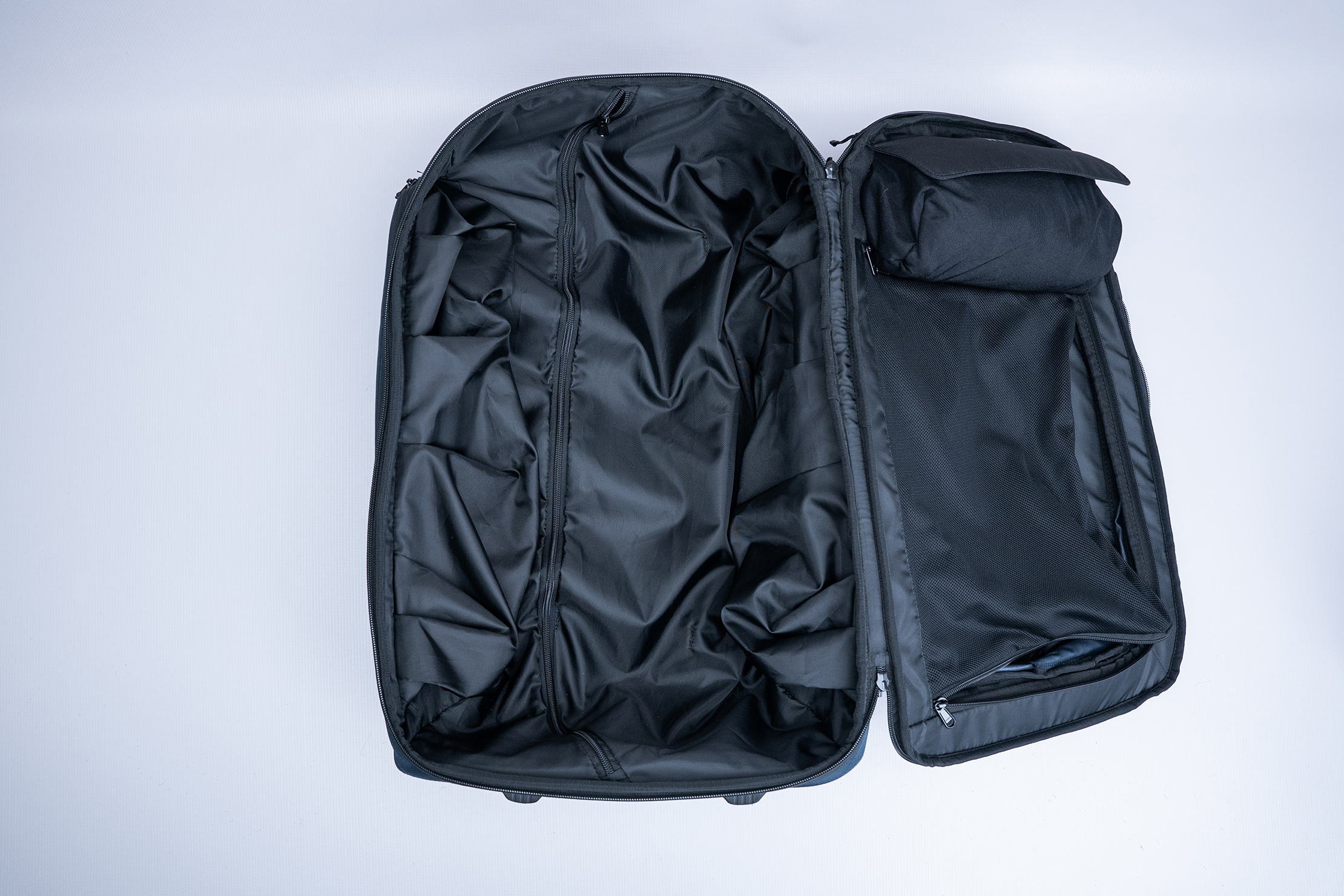
Inside the main compartment, the clamshell opens to reveal a fairly simple packing area with a front-side mesh compartment and the quick-access top pocket’s overhang. We fit about two weeks’ worth of clothing using packing cubes, but it was tight. The internal liner adds unnecessary bulk and makes it hard to maximize the space, particularly the fabric adjacent to the shoe pockets on either side. They’re unnecessarily gusseted, giving the fabric more volume to take up space we would’ve otherwise used for additional gear.
There’s also a toiletry bag that Tropicfeel says can fit either horizontally or vertically, but neither orientation feels natural. When packed horizontally, it eats into the main compartment; vertically, it rubs against the zipper track. The way you’re meant to orient it is finicky, too. You have to put the quick-access top pocket’s overhang through the liner so it’s flush against the roof, or leave it hanging, depending on which orientation fits your packing layout. It’s just awkward all around.
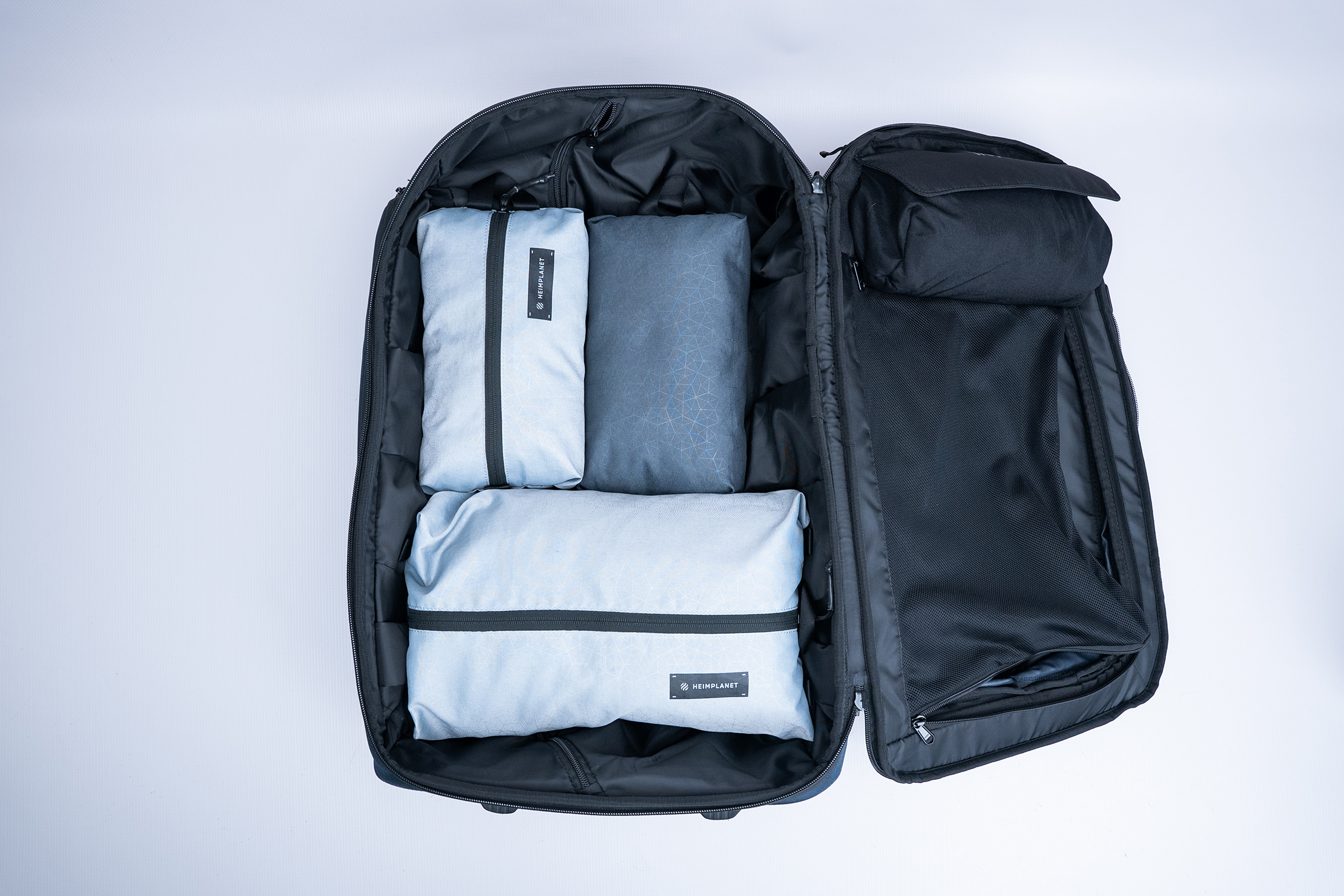
On the plus side, there are some thoughtful details. You can access the internal frame for potential repairs. The soft mesh dividers feel nice, and the materials throughout are water-resistant. But the overall experience of packing and accessing the bag feels cramped and inefficient. You can make it work—but only if you underpack it. And if you have to underpack a bag to make it functional, that’s not a great sign.
Usage Timeline
Condition: Excellent
- Material has held up well
- Extremely difficult to pack properly
- Shoulder straps are super easy to engage, which is a major perk!





Get your questions about the Tropicfeel Lift Rollerbag answered from our team and the Pro Community right here on the page. Plus, join discussions with other members about gear, guides, and more.
Join Pack Hacker Pro or, Sign In